
Tech Executive Relocation Playbook: Buying Your Silicon Valley Home from Out of State

Tech Executive Relocation Playbook: Buying Your Silicon Valley Home from Out of State
You signed the FAANG offer in Seattle, NYC, Austin, or abroad. You have 60–90 days to land in Silicon Valley with a place to live. Here’s the actual playbook for buying remotely — from someone who’s closed dozens of these in the last 12 years.
Most relocation guides I’ve read are useless — written for hypothetical movers who have unlimited time and want to “explore the area for six to twelve months.’” Tech executives don’t have six to twelve months. You signed the offer, you have a start date, and you’re trying to buy a multi-million-dollar home you’ve barely visited.
What follows is the actual playbook I’ve refined over 12 years guiding incoming tech executives from Seattle, Austin, NYC, London, Tel Aviv, Bangalore, Singapore, and a half dozen other cities into Silicon Valley homes — usually in under 90 days, often without them setting foot in the Bay Area until escrow.
The Timeline (and Why You’re Probably Behind)
If you have 90 days from offer signing to start date, the realistic schedule looks like this:
Days 1–14: Discovery
Define life stage and constraints. School ages, school preferences (public vs private), commute tolerance, lot size needs, budget range, must-haves vs nice-to-haves. This is the conversation that determines neighborhoods. Wrong neighborhoods waste the next 60 days.
Days 7–30: Virtual tours
Live FaceTime walkthroughs of 8–15 properties across 2–3 weekend cycles. Your agent walks every room, every closet, the yard, the street, the commute. You see real-time, not just photos.
Days 30–60: In-person fly-in
One focused 2–3 day visit to see your top 3–5 finalists in person. By this point you should know which neighborhoods you want and have a working preapproval. The visit confirms or eliminates — it doesn’t expand the search.
Days 60–90: Offer + close
Submit on the right home, negotiate, escrow, close. Silicon Valley closes typically run 21–30 days. Build buffer. Move-in ideally lines up with start date or slightly before.

Palo Alto residential character — the kind of street you want to walk through on your in-person fly-in before committing.
Match Neighborhood to Life Stage
The single biggest mistake incoming executives make is matching themselves to the wrong neighborhood. The right answer depends almost entirely on your life stage:
No kids, want walkability and lifestyle
Palo Alto (downtown adjacent, University Ave or California Ave pockets), Mountain View (Castro Street area), Los Gatos (downtown), San Jose Willow Glen. Restaurants, coffee, walkable downtown, smaller lots. Younger founder/tech-employee energy.
Kids in elementary school, prioritize public schools
Cupertino, Saratoga, Los Altos, Palo Alto, Mountain View, Los Gatos. Verify the specific elementary feeder. School boundaries matter enormously here — a $300K–$700K premium for the right feeder is normal. Have your agent walk you through the maps.
Kids in high school, prioritize the high school
Same cities as above, but now the high school of the feeder pattern dominates. Lynbrook (Cupertino), Saratoga High, Los Altos High, Palo Alto High / Gunn, Los Gatos High — each has its own academic culture. Visit if possible.
Kids out of the house, want privacy and acreage
Los Altos Hills, Atherton, Woodside, Portola Valley, Saratoga foothills. One-acre minimum (Los Altos Hills) or larger estates. Different lifestyle, different price tier ($5M–$30M+).
Don’t need to be tied to school district at all
Open the map wider. Burlingame, San Mateo, Belmont, San Carlos, Redwood City Peninsula towns. Or coastal: Half Moon Bay, El Granada, Princeton-by-the-Sea. More house, water proximity, slightly longer commute on some routes.

Different neighborhoods serve different life stages. The fastest way to make a relocation easier is to identify your life stage clearly before you start touring.

Aerial South San Jose / Willow Glen — virtual tours need to show you exactly what abuts the property, not just the inside.
The Virtual Tour Discipline
FaceTime tours actually work — but only if your agent is doing them right. The tours that close from a distance share these properties:
What a Good Virtual Tour Includes
• The exterior approach — what you see driving up, where the front door faces, what the street looks like in both directions. • Every room walked at human pace, with the agent narrating issues (water marks, deferred maintenance, settling cracks, dated finishes). • The closets, garage, attic, and crawlspace if accessible. The unflattering corners are where you discover the truth about a home. • The yard at the property line — what abuts the lot. Neighbor’s pool, blank wall, mature tree, easement, view potential. • A drive of the immediate area at the time of day you’d commute. Traffic, noise, school proximity, walkability.School Enrollment Doesn’t Wait for Closing
Silicon Valley public school districts have specific enrollment windows and proof-of-residency requirements. If you have school-age kids, start the school enrollment process the moment you have an executed purchase contract — not the moment you close.
Required docs typically include: signed purchase contract or lease, government-issued ID, immunization records, prior school transcripts. Some districts (PAUSD, Cupertino Union, Los Altos School District) have specific enrollment portals and deadlines.
Critical detail: if your closing falls late August or after Labor Day, you may miss the September start date in your zoned school. Plan accordingly. A good agent will flag this before you commit to a specific closing date.

The relocation buying process compresses 6–12 months of normal home-shopping into 60–90 days. Process discipline is the difference between buying the right home and buying a regrettable one.

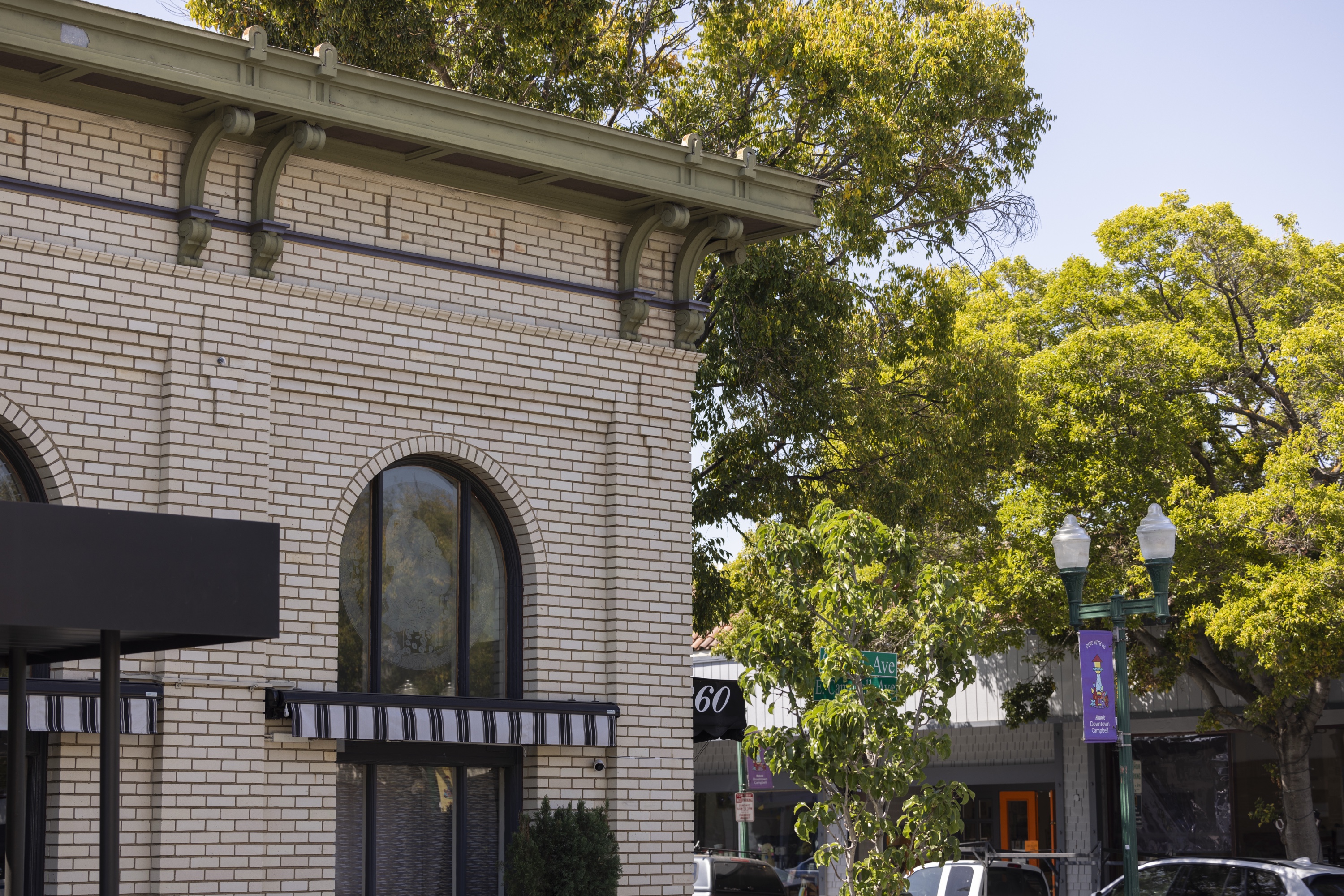
Iconic Redwood City gateway — first-90-days logistics include landing inside the right municipality for your DMV, schools, and utility setup.
Practical First-90-Days Logistics
Driver’s license
California requires you to obtain a CA license within 10 days of establishing residency. Schedule your DMV appointment online before you arrive — walk-ins are nearly impossible. The Real ID upgrade requires additional documentation.
Vehicle registration
If you ship your car, you have 20 days from arrival to register it in California. Smog certificate, weight slip, application, fees. The DMV process is identical to most other states but moves slowly — bring patience.
Utility setup
PG&E (electric + gas), the local water district (varies by city), trash/recycling (Recology or West Valley Collection depending on city), Comcast or AT&T fiber for internet. Most can be set up online a week before move-in. PG&E sometimes requires a deposit if you don’t have prior California utility history.
Banking
If your current banking is national (Chase, B of A, Wells Fargo), no changes needed. If you’re moving from regional banks elsewhere, set up a California-friendly account before arrival. First Republic was the standard tech-executive private-banking option for years; the post-acquisition successor banks still serve this market.
Frequently Asked Questions
Can I really buy a home in Silicon Valley without ever visiting?
Yes — I’ve closed multiple transactions where the buyer first set foot in the Bay Area at the final walk-through. It requires disciplined virtual tours, a trustworthy agent acting as your eyes, and a willingness to walk away from properties that don’t answer your questions clearly. Most buyers I work with end up doing one short in-person trip near offer time, but it’s not strictly required.
Should I rent first or buy directly?
Depends on your conviction about the role and the area. Renting for 6–12 months gives you time to learn the geography but costs $8K–$15K/month and burns capital. If you’re confident you’re staying, buy directly. If the role might not work out, or you’re unsure of neighborhood, rent first. Tech executives I work with split roughly 60/40 toward buying directly.
What about RSU vesting / stock-based comp for mortgage qualification?
Most luxury Silicon Valley lenders are sophisticated about RSU income. They’ll typically count vested-but-unsold RSUs in your liquid assets and use a 2-year average of income (including realized RSU gains) for qualification. The right lender for tech executives is not the same as a generalist mortgage broker — ask your agent for specific recommendations.
How do I evaluate neighborhoods I’ve never been to?
Use Google Street View aggressively, watch your agent’s drive-through videos, check school district maps, look at recent close prices in specific blocks (the data tells you what buyers value), and most importantly, talk to your future colleagues about where they live. Co-workers are often the most honest neighborhood guides for incoming executives.
30-Minute Relocation Strategy Call
Free virtual call. We map your life stage, budget, and timeline to specific neighborhoods, then build a 90-day path to closing. No pressure, no scripts — just the actual plan.
Schedule with BradCategories
Recent Posts